
Work Samples
Proposed MERS Awareness & Education Initiatives Campaign

Below are some quick ideas and mock examples Judy proposes to help bring immediate awareness and attention to various high priority* MERS initiatives and programs.
(*Note: These are assumptions based on Judy’s outsider observations and best guesses about MERS at this initial stage in her application for the Communications Co-Ordinator position at MERS. Normally she would work with the team to define, prioritize, conceptualize, draft, develop, and finalize campaign pieces like these.)
Campaign summary:
Goals:
Create awareness of a variety of high priority MERS initiatives
Use simple imagery and text to communicate the information.
Create simple imagery and designs that are easily sharable across any social channel
Partner with like-minded organizations (e.g. Ocean Wise) to help promote messaging with shared goals (e.g. Reporting whale sightings WRAS)
Target audiences:
Existing supporters/followers who already advocate for MERS and Humpbacks and will be quick to advocate and spread the word with the “tools” we can give them.
Recreational boaters, commercial fishing vessels, large transport vessels & ferries
(More definition is required here — how to increase education for large vessel operators? Approach BC Ferries to include a whale-safe boating course, a large vessel-focus version, for all crew members no matter their position - the more awareness and eyes on the water, the better.)
Tasks:
Define the main initiatives to begin with for “phase 1”
Increase awareness of Whale Report Alert System app (partnership with Ocean Wise)
Report Sightings with WRAS to prevent vessel strikes
Why it’s important to report/what the WRAS app does - works with large commercial vessels
(Future: ask our audiences to appeal to large vessel operators to use the app regularly)
Educate about Humpback Whale behaviour year round. Key messages:
Why humpbacks get hit/don’t get out of the way - rest at the surface, no sonar like orcas, etc.
Migration habits - timing variations, migration into December (research), not all whales migrate (research)
More…
Promote Whale-Safe Boating Course
Increase awareness of course
Establish who it’s for/who can take it, low cost/pay what you can, easy to take (online, self-paced)
Create 1-2+ sharable infographics for each initiative
Use clear, audience-focused language to communicate the message for each initiative
Define the audience(s) for each
Define a clear goal/action and benefit/outcome for the audience to understand
Use action-oriented, simple language to plainly explain the goal/action we wish the target audience to understand and take
Create versions and formats for each social channel
Upload and if multiple variations of campaigns are created, AB test effectiveness of versions, for colours, images, text, etc.
Measure success of the campaigns through responses: e.g. reactions, shares, clicks, course sign ups, app downloads (partnership with Ocean Wise), and overall comments.
Analyze and review insights, make adjustments for phase 2 initiatives, and continue
Campaign Examples

Please note: Since branding guidelines (fonts, colours, language, backgrounds, templates) are unavailable for demonstration purposes, please focus on language in these examples rather than graphic design. Promises made in these campaigns (e.g. monthly flag giveaway) are also for demonstration purposes only.
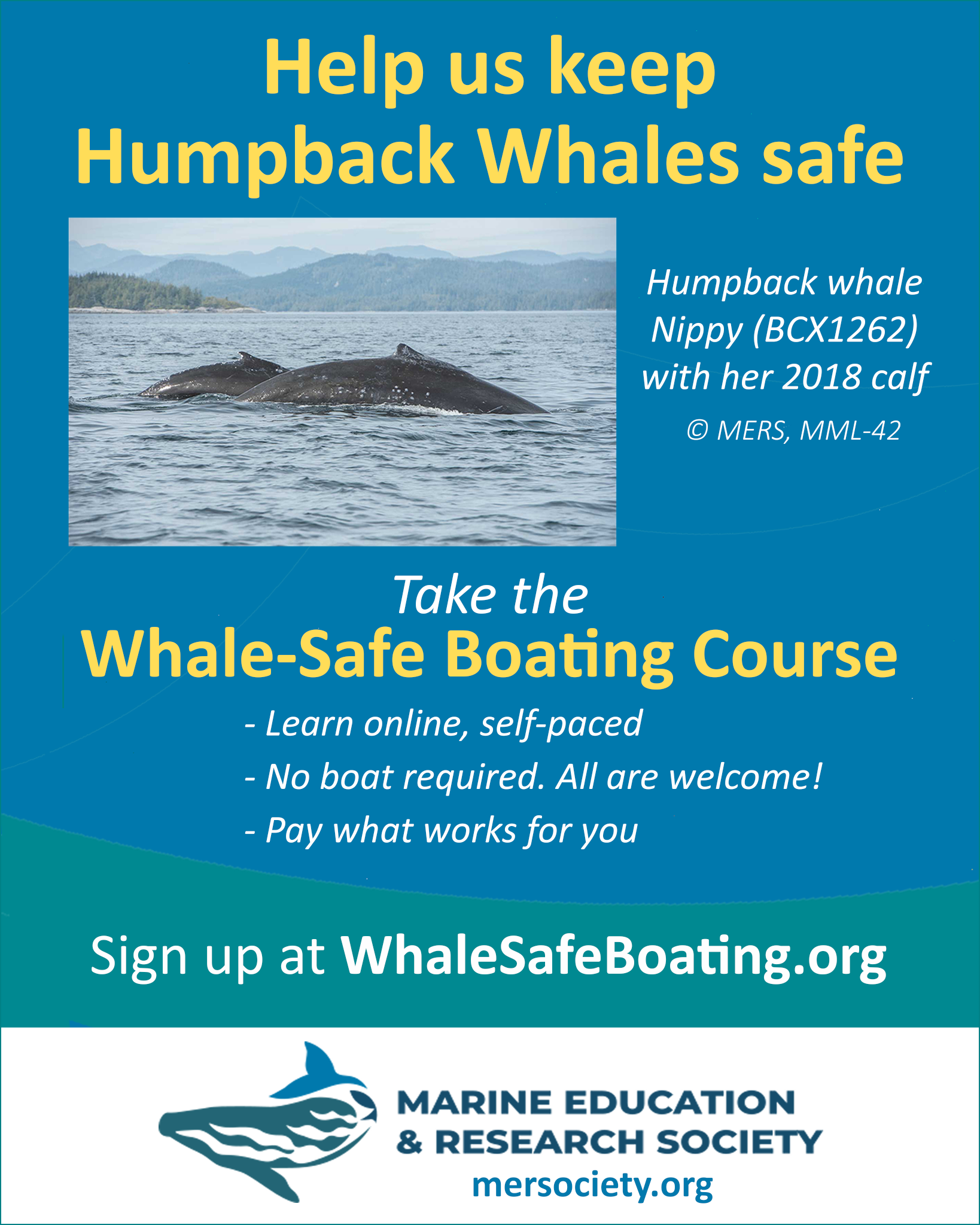
Whale-Safe Boating Course Example
Existing promo found on Facebook, August 29 post
Benefits:
Easily sharable across all social channels
Underachieves:
Lacks a clear benefit statement for the target audience
Lacks clear self-identification language - motorized, non-motorized
The flag takes takes up a prominent location and, while it's relevant, the message it sends degrades the true purpose of the promotion, which is to help reduce whale accidents/interaction/fatalities
Lacks an action statement “register, sign up”. Every little bit helps!
Revised examples
Create a top-down story to help capture attention.
Point form summary of course helps to answer main questions readers will have when first considering the course.
Bonus chance to win the flag is still included but given a lower priority compared to the main benefit/goal of helping to keep HW safe.
A+B test ideas:
a version with a whale image + caption to give names to the goal
a version without the flag (since the giveaway may not be running all year)
a version with no bullet points
A version with a sentence instead of bullets
Future consideration/expanded campaign ideas:
Create a specific message for kayakers, paddleboarders, sailors, and cruisers using language they will immediately recognize
Create a specific message for onshore observers, no boat needed. All of the information in the course is important for everyone on the coast to know.
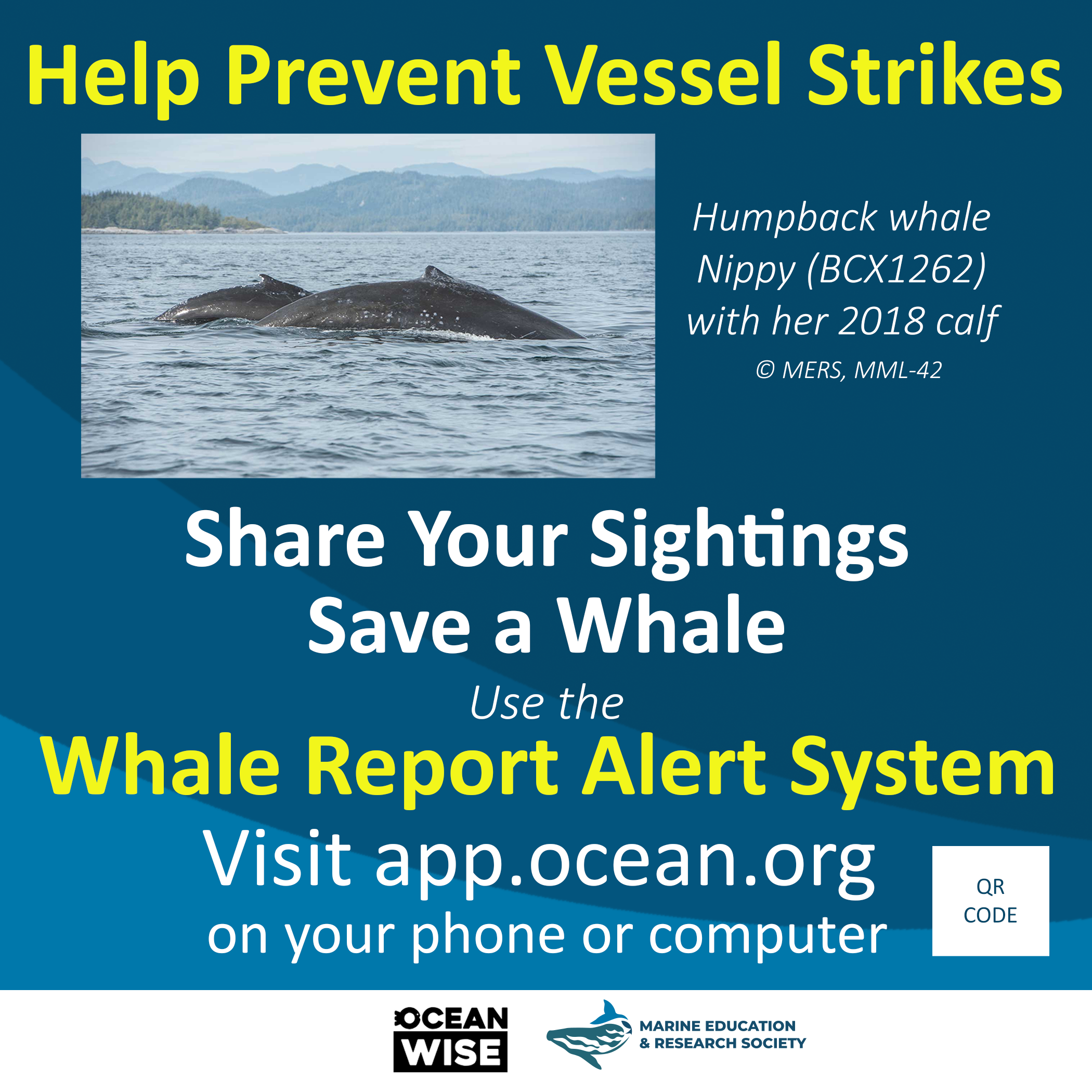
Example
State the shared goal “Help prevent vessel strikes” as a succinct action statement.
Make a simple “what to do” statement connected to an immediate shared benefit/goal.
Provide details on how to do in a simple way.
Partner logos of organizations with this shared goal
Link directly to the app - OR - link to a MERS page that both has the direct app link at the top, but also explains more about why this is important and what the app does. (Also explain that it’s not meant for whale watching operators.)
A+B test ideas:
Ocean Wise has a promo that shows the map view in the app. Do something similar.
Future consideration/expanded campaign ideas:
TBD
WRAS App Example
Work Samples
A selection of Judy’s work is available for review below and includes a range of her skills, from writing examples to social campaigns to content and communication planning exercises and strategies.
Non-profit society - event promotion campaign including social campaign planning, copywriting, photography
Scientific research centre - content strategy and content development/copywriting coaching for a website redesign
Retail consumer goods - content strategy and content development planning for a website redesign
Telecommunications - content strategy and content development/copywriting coaching for a website redesign
Government - content strategy and content development/copywriting coaching for a website redesign
Financial institution - brand communications exercise
Financial institution - audience exploration exercise
Paid media ads - copywriting
Media kit - copywriting